
Searching for Essence: Why Brands and Humans Are Looking for Each Other Again
Something has changed lately on LinkedIn: my feed is filled with articles from Harvard Business Review on the value of professional friendships. Brands hiring storytellers to bring back the human element that AI can't replicate. Conversations about mental health, healing, and the relationships that actually sustain us at work.
It all points to something quietly profound: now that AI has fully integrated into our daily work, we're finally looking at, and valuing, the human qualities we've been missing all along.
The Pandemic Changed Something Fundamental
This shift didn't start with AI alone. Let's not forget that since the pandemic, there's been a massive wave of conversation around mental health, therapy, self-awareness, and even inherited generational wounds.
People have spent the last few years getting to know themselves more deeply as humans. And in doing so, they've realized just how essential sane, safe relationships are - not just in life, but at work.
So here's the thing: AI arrived to replace a lot of our work at the exact moment humans started understanding themselves and each other more than ever before.
That parallel isn't lost on me. And it's why I don't jump on the bandwagon that AI is completely bad or that it's going to turn us all into machines. Instead, I wonder how this coexistence will normalize, and what it means for the way we build teams, brands, and businesses going forward.
Brand Essence Before AI: The Work That Felt Sacred
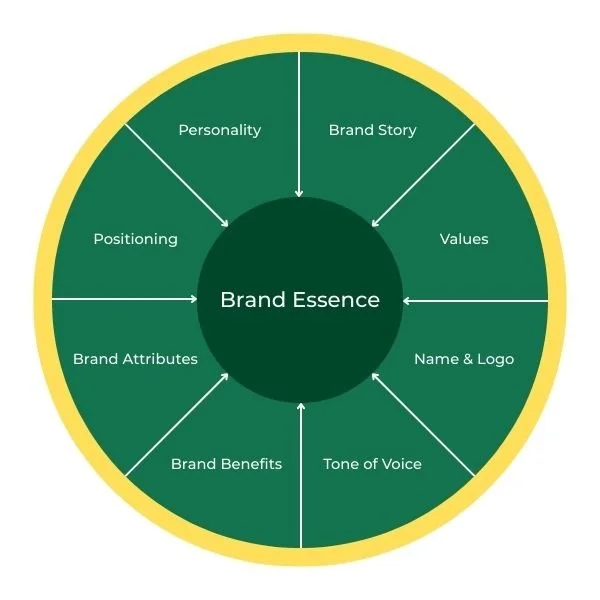
Way before AI, as a brand strategist who spent years writing decks and refining frameworks, I would spend days going back and forth in my head to lock down the perfect Brand Essence for my clients.
I knew most people would barely remember it. I knew some wouldn't even know how to apply it day-to-day.
But I would never take that part lightly. It felt too core. I wouldn't feel honest if I just went for something that rhymed nicely without it actually giving the brand a real soul - a soul that personified it, so that everyone working on it would feel the brand as if it were part of the team.
Because here's the thing: humans can work together. And if people on the team understood the brand archetype, its heart and soul and essence, they would know how to develop it, speak about it, and push it to grow.
That's not something AI can replicate. A bot can generate a tagline. It can't make a team feel a brand.
Brands Are Looking for the Human Essence Again
Now, in a highly automated, AI-assisted world, brands are realizing they need that human essence more than ever. The topics flooding LinkedIn - friendship at work, storytelling as strategy, emotional intelligence in leadership - aren't random. They're a response. A counterbalance.
AI has made work faster, but it's also made everything feel a little more... sameness. The same templates. The same tone. The same keywords optimized for the same algorithms. And so humans are looking for each other again. Not as a rejection of AI, but as a way to coexist with it while staying grounded in what actually makes us human: connection, empathy, story, soul.
What This Means for How We Build Brands
This shift matters for anyone building a brand, leading a team, or positioning themselves as a leader. Brand strategy isn't just about market differentiation anymore: it's about creating something people can connect to on a human level. Personal branding isn't about being the loudest voice: it's about being authentic, relatable, and consistent. Marketing consulting isn't just about campaigns: it's about understanding the humans on the other side of the screen.
The brands that will thrive in this next era are the ones that don't just optimize for algorithms, they optimize for empathy, clarity, and genuine connection.

Staying Unapologetically Human
It's a really interesting time we live in. We're feeling a lot of winds globally, some winds of positive change, some others are frankly quite worrying, and we've all been waiting for someone to press that restart button on the planet so we get a sense of where we landed. But with this observation, I hope this is a glimpse of hope: it seems that at work, in an age of automation, we are actively searching for one another and making sure our uniquely human qualities get prime seat at every table. Because in the end, no matter how advanced the technology gets, the thing that will always matter most is quite simply, our humanity.
Further Reading
Don’t Underestimate the Value of Professional Friendships - Harvard Business Review
Businesses hiring storytellers to ‘cut through the AI slop’ - The Times